Opinion
Fear and Corporate Money Lost in Michigan. The Law Should Catch Up.
Abdul El-Sayed's Senate win shows the old dog whistles no longer work on Michigan voters, and that social media can break the campaign finance cycle Citizens United built.
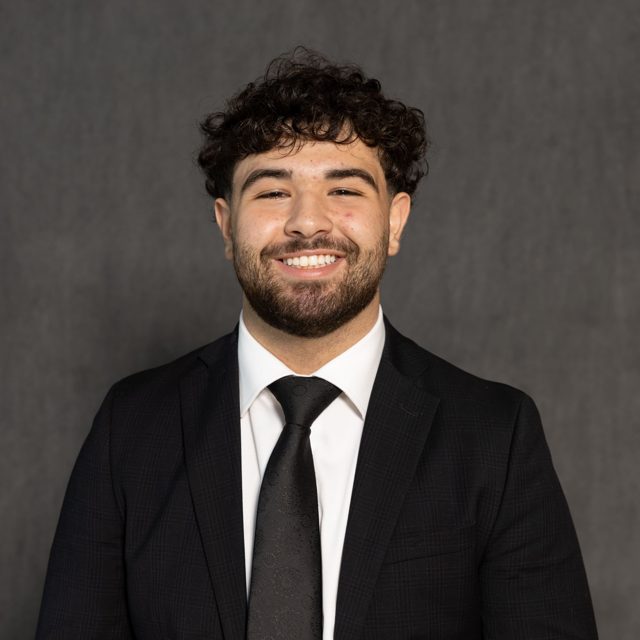

For decades, the formula worked. Call the candidate a Muslim, call him a communist, outspend him on television, and let fear do the rest. On Tuesday, Michigan broke that formula. Abdul El-Sayed won a seat in the United States Senate after his opponents called him a "jihadist" and outside groups poured tens of millions of dollars against him. His win proved two things. Dog whistles no longer scare voters, and corporate money no longer decides elections.
The dog whistle has a long record in American politics, and Michigan knows it well. In 2008, a voter at a John McCain town hall called Barack Obama "an Arab." McCain took the microphone back and called Obama "a decent family man." The fact that a presidential candidate had to correct the record says enough about the climate. In 2018, when El-Sayed first ran for governor, Republican state Senator Patrick Colbeck accused him of ties to the Muslim Brotherhood. In 2025, President Trump called Zohran Mamdani a "communist lunatic" before New York City elected him mayor.
This year, the same playbook came back at full strength. Trump and Senator Ted Cruz led the attacks. A national podcaster called El-Sayed a terrorist, and his opponent, Mike Rogers, amplified the post. Michigan elected him anyway, in a state Trump carried twice. He will be the first Muslim to serve in the United States Senate.
The Founders saw this coming. Article VI of the Constitution says "no religious Test shall ever be required" to hold federal office. That clause stops the government from barring a candidate because of his faith. It cannot stop voters from doing the same thing at the ballot box, and for most of American history, many have. On Tuesday, Michigan voters held themselves to the standard the Constitution sets for the government. They were told to fear a Muslim, and they refused. No court could have ordered that result. Voters chose it.
The second lesson is about money, and here the law has done real damage. The modern system starts with Buckley v. Valeo, 424 U.S. 1 (1976), which treated campaign spending as protected speech. Citizens United v. FEC, 558 U.S. 310 (2010), went further and held that the government cannot limit independent spending by corporations and unions. Months later, the D.C. Circuit in SpeechNow.org v. FEC, 599 F.3d 686 (D.C. Cir. 2010), cleared the way for super PACs that can raise and spend unlimited amounts. McCutcheon v. FEC, 572 U.S. 185 (2014), then struck down the overall cap on what one donor can give to candidates and parties. Each decision made the same choice: more money, from fewer sources, with less control.
The result has been a cycle with no exit. A candidate who cannot raise large sums cannot buy television. A candidate who cannot buy television cannot reach voters. And the outside groups that fill the gap answer to their donors, not to the voters in the district.
This race broke that cycle. In the August primary, outside groups spent about $62 million supporting Representative Haley Stevens. El-Sayed won anyway. The general election drew more than $100 million in advertising, and the bigger pile of outside money still did not decide the result.
What replaced it was social media. A campaign no longer needs a television budget to reach voters. It needs a media team with its hand on the pulse of the public, especially Gen Z. El-Sayed campaigned with online creators, including the streamer Hasan Piker, and reached voters through their channels. In the primary, he did best with voters between 18 and 34, the group that rarely watches a local newscast.
The Supreme Court has already said where political speech now lives. In Packingham v. North Carolina, 582 U.S. 98 (2017), the Court called social media "the modern public square." Campaign finance law has not caught up. It was built to regulate the purchase of speech, and it has little to say about speech that costs nothing to spread. Under the Federal Election Commission's internet exemption, 11 C.F.R. § 100.94, an individual's unpaid online activity generally does not count as a contribution or an expenditure. That means a creator who backs a candidate for free can reach millions of voters without spending a dollar. No super PAC is needed.
That is the opening. Social media cannot overturn Citizens United. Only the Court or a constitutional amendment can do that. But it can make the decision matter less. For sixteen years, corporate money bought the loudest voice in every race. In Michigan this year, it was outshouted for free. Lawmakers should not waste the moment. They should act in three ways.
First, Congress should pass real disclosure. The DISCLOSE Act, which would require outside groups to name their major donors, has stalled in the Senate for more than a decade. Voters who can now find candidates on their own should also be able to see who is paying for the ads aimed at them.
Second, Congress should pursue a constitutional amendment that lets Congress and the states set reasonable limits on campaign spending. Citizens United rests on the Constitution, so a statute alone cannot undo it.
Third, the Supreme Court needs ethics rules with teeth. In 2023, reporting showed that Justice Clarence Thomas had accepted luxury travel and other gifts from a billionaire donor without disclosing them. The Court adopted a code of conduct that November, but the code has no enforcement mechanism. The justices who decide campaign finance cases should be bound by the same kind of enforceable rules that bind every other federal judge. Public trust in those decisions depends on it.
I watched the results come in as a Wayne Law student and as an Arab living in Dearborn. For most of the night, I was afraid the old narrative about Arabs and Muslims had worked one more time. It did not. We won.
The lesson belongs to voters. They heard the attacks, weighed them and judged the candidate on what he said he would do. Outside money did not change that, and neither did fear. Calling someone a Muslim or a communist is not going to cut it anymore. The law should now catch up to the voters.
Source: read the original document
This is an opinion piece. The views are the writer's own and don't necessarily reflect those of The Mitten Mile. Want to respond? Send us a letter.
Spot an error? Email [email protected]. We fix mistakes and note the change. See our corrections policy.
More opinion and related coverage
All opinionOpening a business in Michigan: how zoning approval works
Permitted uses, special land uses, site plan review, and variances: what to check before you sign a lease.
ZoningSite plan reviewSpecial land useZoning board of appeals